
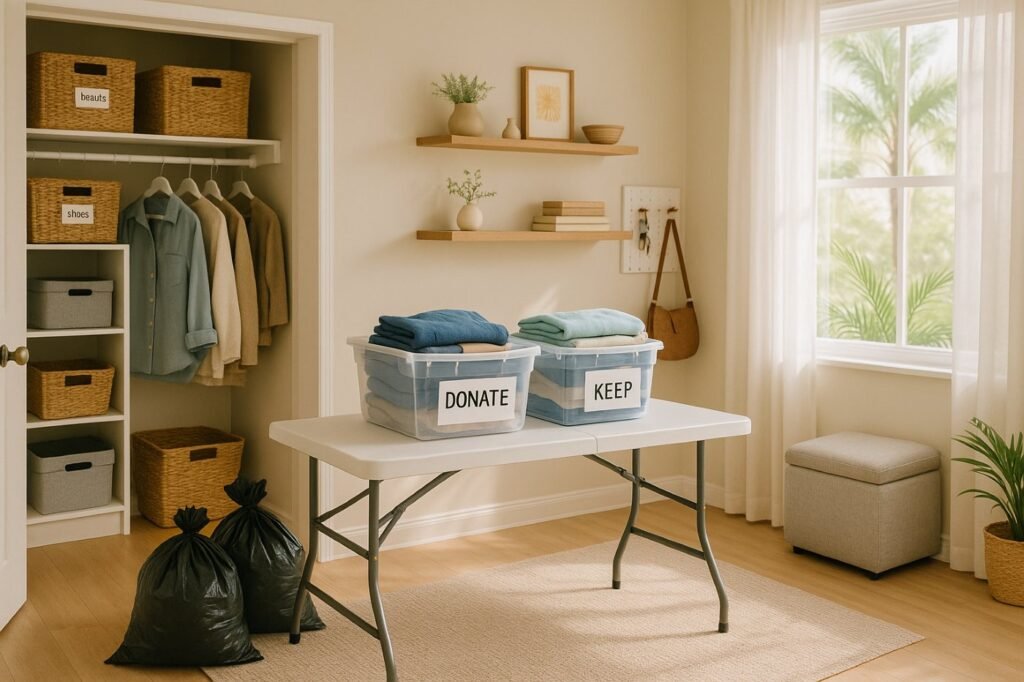
Want to clear your clutter but don’t know where to start? This page will help you with decluttering tips for beginners. I’ll show you how you can get started and the benefits when you do. Each section is broken down into manageable tasks with downloadable checklists that will help you along the way.
I know firsthand how a home can quickly become cluttered, and it’s no joke. When my husband and I retired, we downsized to a much smaller and manageable house. What wasn’t manageable, though, was trying to find a place for everything in the new house. We had less storage, less square footage, and no basement. Oh, and it’s Florida, so the attic was a no-go for most stuff as it was too hot.
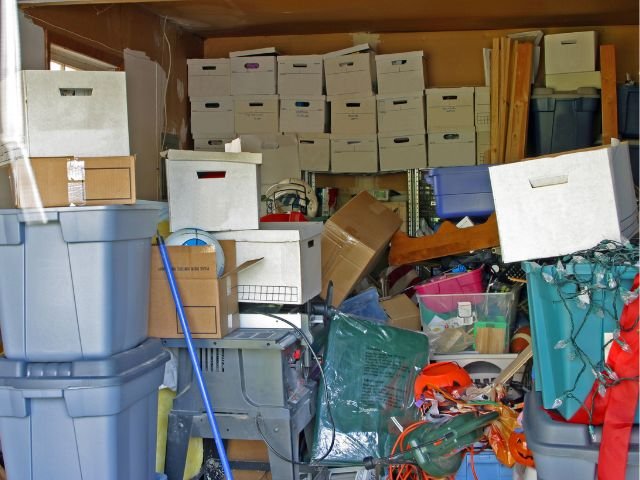
My problem… I knew I had to get rid of a lot of stuff, but the thought of letting go was paralyzing to me. What to get rid of, what to keep, where to put what I would keep… yikes! It’s a lot, let alone dealing with sentimental items. Somehow I managed to get through it all, and I learned a lot along the way. This website is a collection of those lessons, which I’m sharing with you.
Identifying How Your Space Became Cluttered
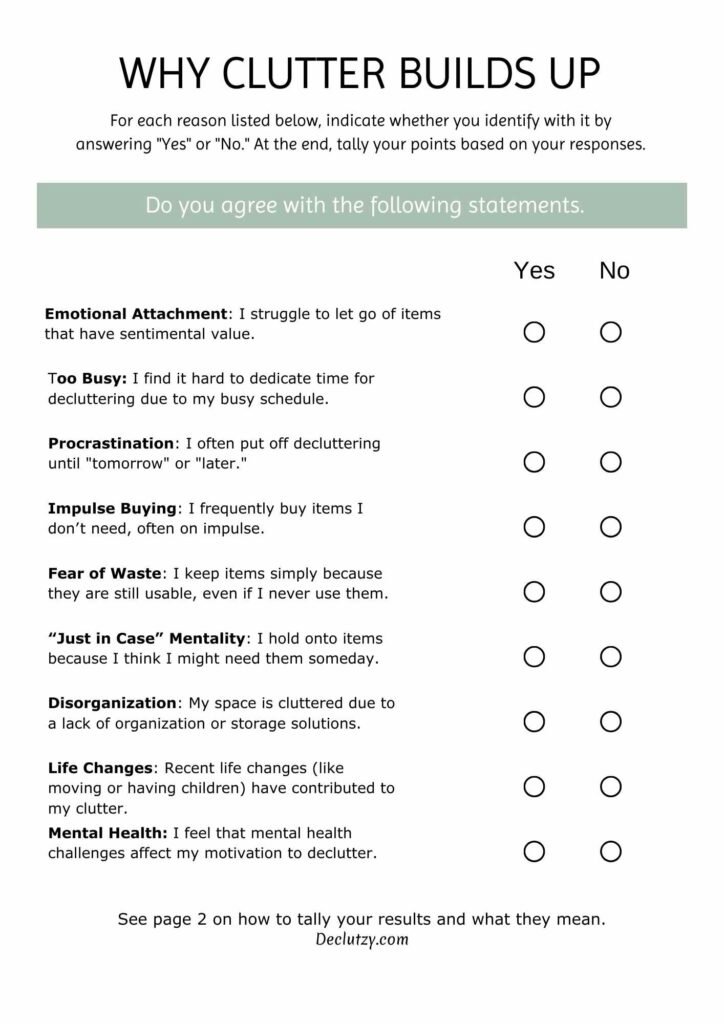
Moving to a smaller house highlighted my clutter, but it didn’t entirely explain how I managed to get so much stuff. Turns out I was also guilty of holding onto sentimental items and loved buying all the latest fads and gadgets online.
My husband didn’t help; he couldn’t part with anything that still worked. He had a tool for every job, even if he only used it once. Everything was kept “just-in-case” we needed it.
Downsizing meant I had no choice but to declutter. If you too are wondering how you got so much stuff, download and complete my questionnaire. Here you can see how many reasons you identify with, and how much of an issue you really have.
Decluttering Tips for Beginners on Setting SMART Goals
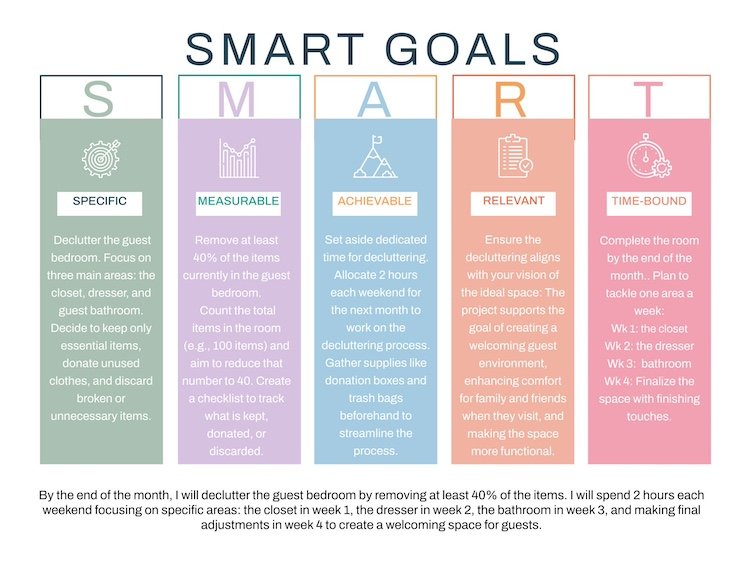
My career in the business world taught me a lot about setting goals; we used the very popular acronym SMART. SMART goals are specific, measurable, achievable, relevant, and time-bound.
I like that it gives me something tangible to follow and measure and works just as well for home projects as it does for work.
A goal of “I need to declutter my house” is way too broad. Go much deeper than that. Spell out exactly what you want to do and give yourself something to stay on track. Below is an example of a goal for decluttering a guest bedroom. Can you see how much clearer that is?
Deciding What To Keep, Donate, Sell, or Toss
Once I have my goal nailed, I start sorting through the clutter, deciding what to do with each item based on these four basic questions:
- Do I love it?
- Do I use it regularly?
- Do I need it?
- Do I have another one that serves the same purpose?
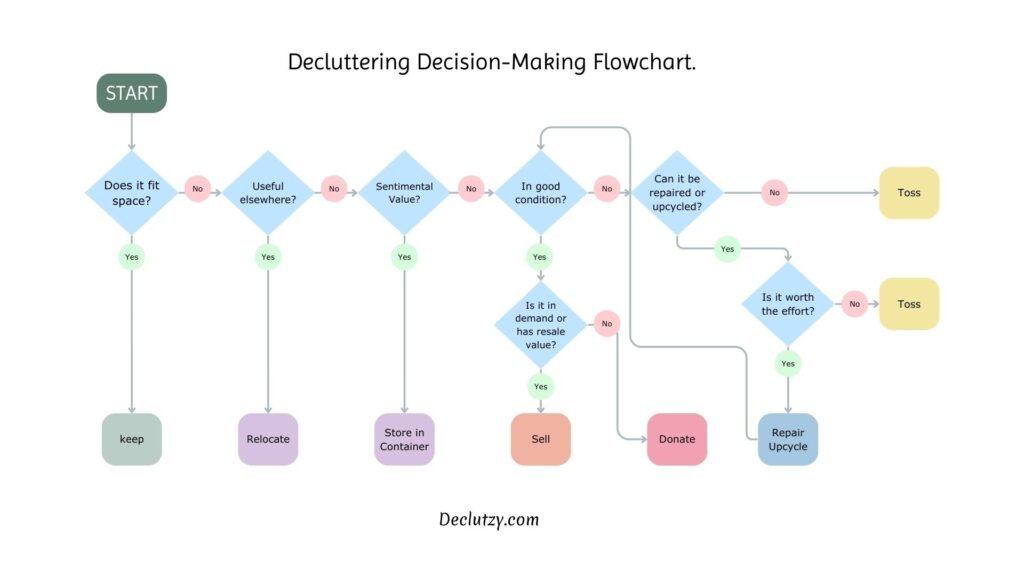
I’ve found I can usually figure out what to do with each item with those four simple questions. But sometimes I get stuck and need much more of a process.
In these cases, I put a little bit more thought into each item. For instance, if it doesn’t fit in this room, would it be useful elsewhere?
I also take the condition of the item into account, along with many other factors.
I’ve outlined how I think things through and make choices in a flowchart you can download and use.
A Simple Method for Decluttering
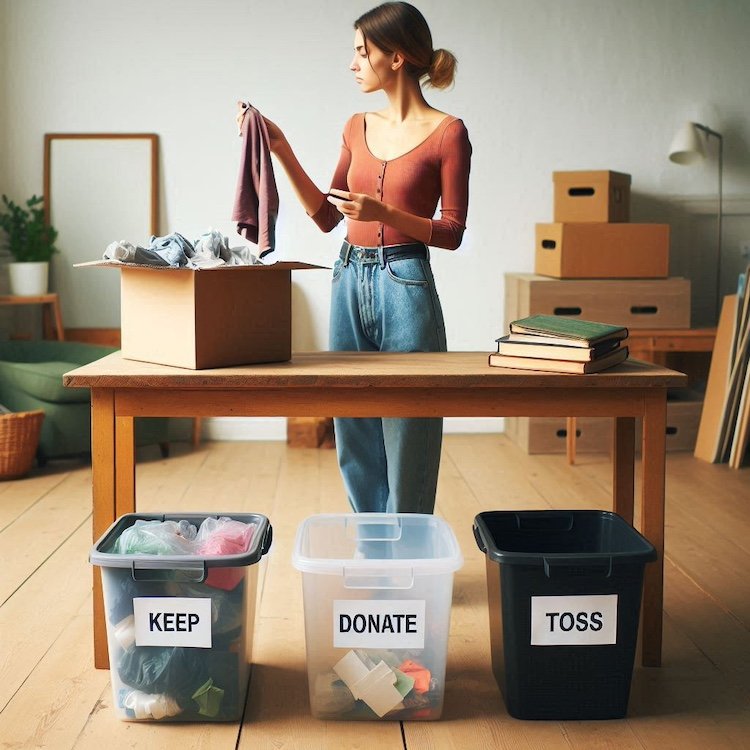
- Set-up a sorting area – I like to use a foldable table that I keep clear except for items I’m sorting. You could also use a countertop or even a bed.
- Label two containers donate and keep – It doesn’t have to be a certain container it could be a laundry basket or even a hamper, but do label them. Use trash bags – and plenty of them – for items you’ll throw away.
- Place containers and trash bags in front of your sorting area and you’re ready to begin.
- Now I start going through boxes and items one-by-one on the table. I have my labeled containers and trash bags in front of my station and start filing them up. Don’t take too long to think about it, the idea is to make decisions quickly.
Use the questions above and if you get stuck, refer to the flow diagram.
Decluttering Rules and Other Tips
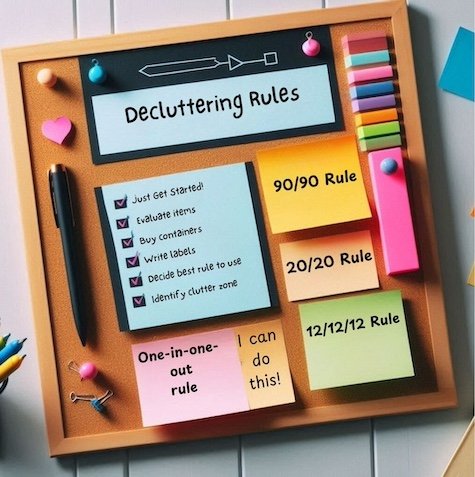
Now you have the basics established, you can plow through your clutter. Feeling a bit braver? You could try some fun challenges and go-to strategies right here. On this page, you’ll find details of how I used the 12-12-12 method as well as other challenges such as the 15-minute declutter blitz or the 90/90 rule.
I’ve also added some tips that help with those tough decisions, as well as downloadable checklists to make things easier.
Clear the Clutter
As soon as I’ve finished sorting through things, I clear them out. All the items that don’t belong are put in their proper place, and the donation items are put straight in my car – not the garage. I find by doing it this way, I’m much more likely to drop them off promptly.
Anything that ended up in the toss pile is already in a trash bag ready for my next collection day. I put aside items I want to sell in a container and out of the way. That’s the subject for another page of what and where to sell items online.
The “Keep” Pile: Maximizing Your Space
Once I’ve finished clearing the clutter, I’m left with only the items I’ve decided to keep – I like this bit. If I’ve decided to keep it, then it must have its own home. This is where floating shelves, stand-alone bookcases, and maximizing space in a closet really works.
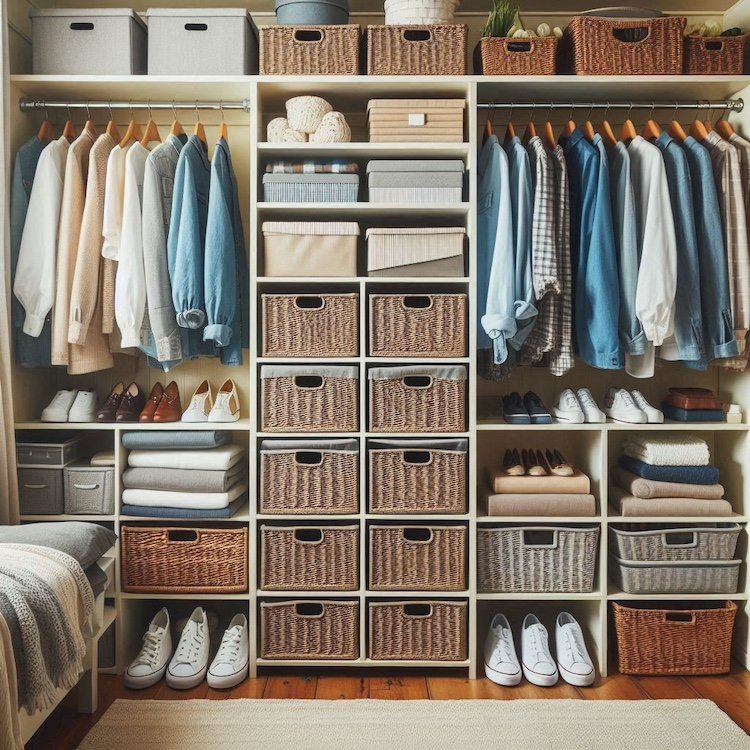
I find storing items in attractive baskets and bins is more functional and looks so much tidier in a closet. If I really want to be organized, I categorize and label my baskets.
Other alternatives for storage I like are multi-purpose furniture and wall-mounted options.
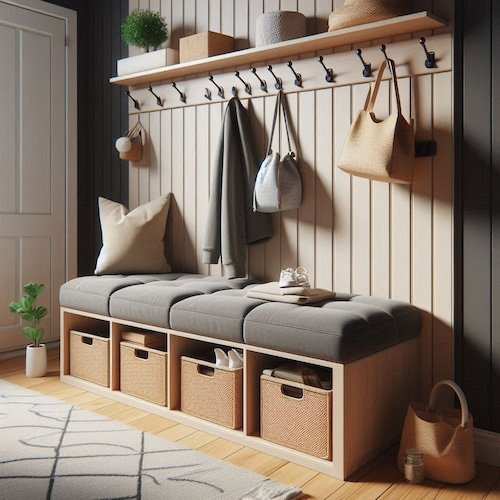
I love an ottoman to keep bedding or extra linens that doubles as a seat. For entryways or common rooms, I like wall-mounted hooks or pegboards for organizing bags, keys, and anything I need kept out of the way.